Built to Last
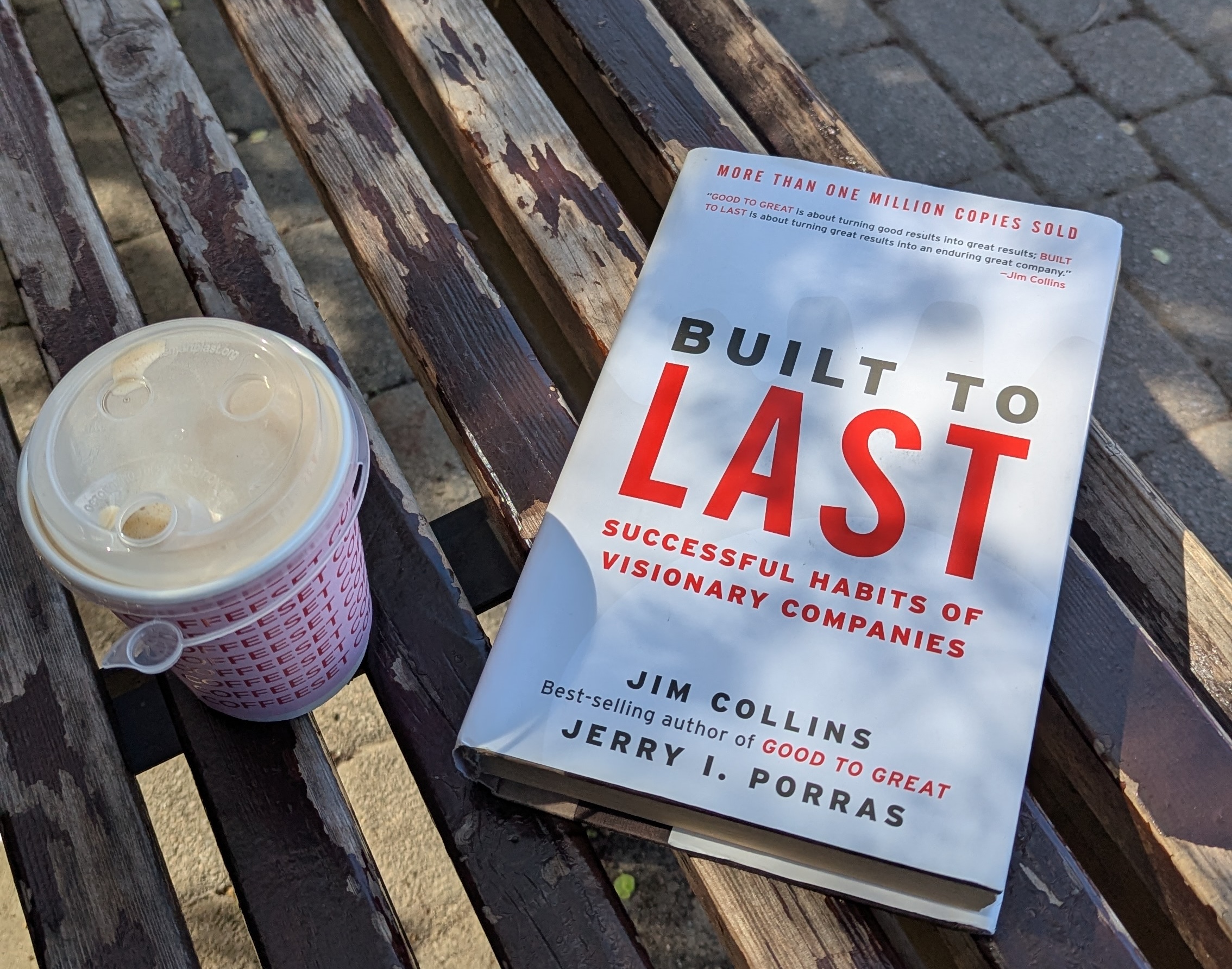
It took me several months to get through Built to Last. There were pages I reread two or three times, moments where I’d put the book down for a day to let things sink in, and then return to them again. While many of the concepts weren’t entirely new to me, certain insights were genuinely surprising.
In short, the book explores the principles that help build “visionary companies”—those that thrive for decades. Even if you don’t plan on launching a business, I highly recommend reading it. Many of these ideas apply to any project, including the most important one of all: life.
My key takeaways from the book are:
1. Vision Is Not a Slogan
Great companies are built around enduring values and a mission. These remain constant, while products, strategies, and business models evolve. Examples: Hewlett-Packard, Sony, Disney—they all possessed a clear internal ideology that guided their decision-making even in times of extreme uncertainty.
2. You Don’t Have to Be a Charismatic Leader
The authors debunk the myth that a “high-profile, charismatic personality” is required at the helm. Great companies aren’t built around a single individual; they are built around a system and a culture capable of outlasting any CEO. The organization itself becomes more powerful than any of its leaders.
3. The “Genius of the AND” (Not the “Tyranny of the OR”)
One of the most powerful ideas in the book: visionary companies don’t choose between stability and change, or between short-term and long-term goals. They embrace both. For example, they protect their core values while simultaneously experimenting fearlessly.
4. Continuous Improvement Is a Necessity
These companies view themselves as living organisms that must grow and adapt, or perish. It’s the same in life: if we aren’t evolving, we are stagnating.
5. Building Greatness Is a Marathon
The central theme of the book is that to create something that outlives you, you have to play the long game. It’s about resilience, strategic thinking, and refusing to chase “quick wins” at the expense of the future.
6. Stepping Out of the Comfort Zone Is the Norm
Visionary companies aren’t about “comfort.” Working in them requires constant growth and meeting a very high bar. Often, they become a way of life. Interestingly, many—like IBM, Disney, and Johnson & Johnson—encourage employees to build their primary social connections within the company culture.
7. Big, Hairy, Audacious Goals (BHAGs)
Ambitious goals don’t just attract talented people; they keep them. Without a high-level purpose, an organization quickly loses its sense of meaning.
8. Purpose Is More Important Than the Product
Great companies don’t exist solely for the sake of a product. They have a Core Purpose—a deep internal “why.” Some examples that stuck with me:
- Merck: To preserve and improve human life.
- Nike: To experience the emotion of competition, winning, and crushing competitors.
- Wal-Mart: To give ordinary folk the chance to buy the same things as rich people.
- Disney: To make people happy.
It’s fascinating to see how purpose shapes actual products. If Disney had limited itself to “producing exciting stories for children,” Disneyland might never have existed. If Nike saw itself only as a shoemaker, we wouldn’t have their iconic apparel, sporting events, or motivational campaigns.
Final Thoughts
Built to Last has earned a permanent spot on my bookshelf. It’s more than just a manual for business; it’s a source of genuine inspiration. I know this is a book I’ll be revisiting for years to come—not just for the professional insights, but for my own personal growth.